

Are You Down About School? Don't Worry, Progress Will Protect You
Listen · 4 min
Generated with AI technology.
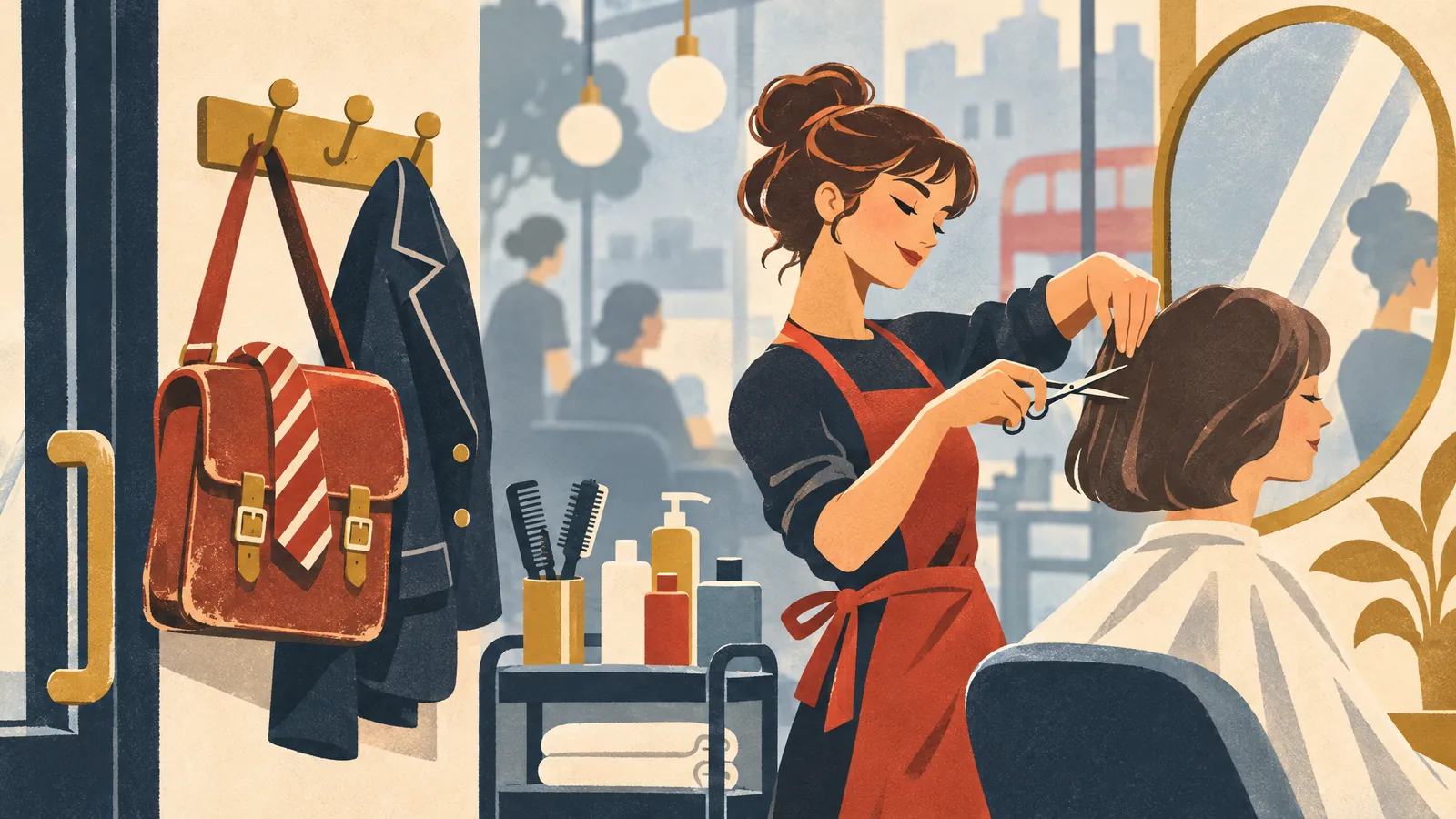
Most everyone was unkempt, unfashionable, and odiferous when the 20 th century dawned. That’s why the well-to-do stood out, though even they had to douse themselves with all manner of perfumes.
Thank goodness for soaring production during each 20th century decade, and the work divided that made all this production possible. With the prices of everything coming down thanks to the tessellation of domestic and increasingly globalized hands (when the 1920s dawned almost no American owned a radio, when the 1920s closed ownership of this once impossibly advanced device was near universal), growing amounts of people were able to escape not just poverty, but the overwhelmingly unattractive look and scent of poverty.
Which brings us to recently deceased hairdresser and lifestyle/looks entrepreneur, John Frieda. In a 2012 interview with The Standard (referenced in his New York Times obituary penned by Penelope Green), Frieda noted that “I became a hairdresser for all the wrong reasons. To get out of studying.”
Frieda’s father was very unhappy with his son, but was wise or prescient enough to let him go to London in pursuit of what animated his unique genius. Frieda wasn't lazy, rather the subjects in school bored him. He went to work as a much-in-demand hairdresser not just for aristocrats, but also the commercially prosperous, musicians, along with the simply fashionable who increasingly had the means to tend to their appearance.
There’s no separating what Frieda became from what was happening around the world. It’s not just that the arrival of an ambitious worker into the country we’re all in is decidedly not a job taken, it’s that the entrance into the labor force of someone from the other side of the world similarly doesn’t represent a job taken, or lower wages for us.
Instead, the more human hands and machines at work, the better the wages and living everywhere. Frieda instructs. As the world liberalized economically, demand for life’s finer things exploded.
Frieda and business partner Gail Federici launched Frizz Ease in 1988. The launch made it possible for people to mitigate vagaries of genes and weather on the path to straighter hair.
When the 20 th century began, such a product would have been unthinkable, for rich or poor. The poor wouldn’t have had the means for such a frivolity, while the rich people market would have been too small to support such a product.
Not so by 1988. As the world liberalized, production soared. Remember this as politicians mindlessly lament low-cost goods from other countries. They signal progress. They also signal more John Frieda’s. As globalized production of former necessities relentlessly pushes down their prices, the introduction of wants for new items picks up.
Think Frizz Ease. The latter epitomized the genius of global production.
In 2002, Frieda and Federici sold Frizz Ease for $450 million. Frieda could look back on his disdain for studying with a smile.
Contemplate this with what’s ahead. Growing amounts of the world are part of the global labor force, not to mention the proliferation of machines that will do and think for us. The price of so much that we formerly couldn’t live without or couldn’t have is poised to plummet. And with it, the John Frieda’s of the world who hate studying will once again proliferate.
Frieda embraced the aphorism “The harder you work, the luckier you become.” Trite? Maybe so. But also a growing reality for the world as soaring production frees millions and billions from what they have to do in favor of what they can’t not do. Work ethic is poised to soar, and with it, “luck.”
Originally published on Real Clear Markets.