
To Ease His AI Worries, Bill Gates Should Meet Karl Ravech
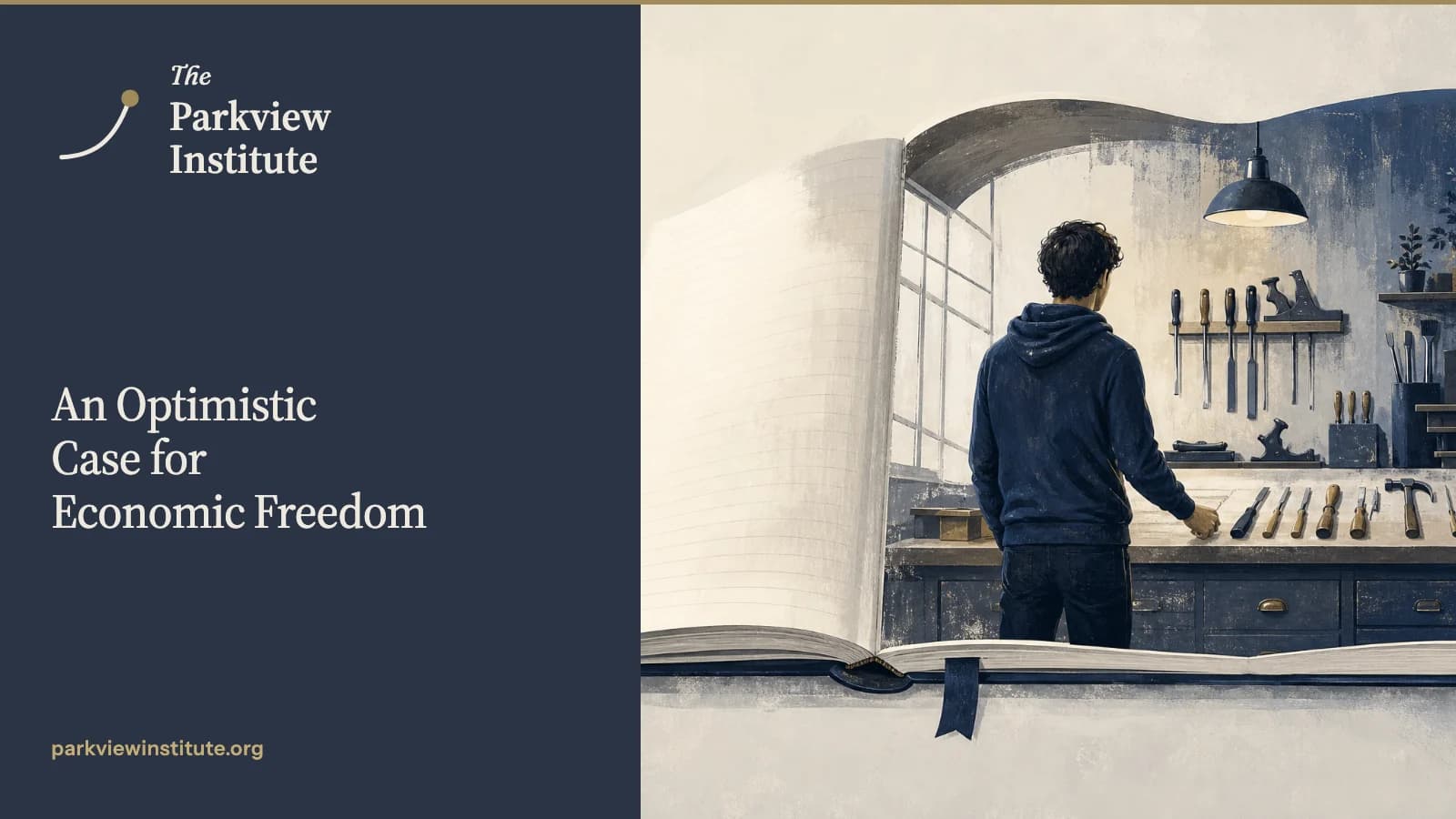
The distinction between preserving a job and expanding the kinds of work people can choose.
Issues
Tamny’s optimism about technology begins with what people can do when machines take on more work. It does not depend on every existing job remaining unchanged.
In his essay about Bill Gates and broadcaster Karl Ravech, Tamny compares the kinds of work available in different eras. The example is personal and concrete: a job someone loves at ESPN could not have existed in an economy where most people had to spend their lives producing food.
He acknowledges that technologies eliminate forms of work. His argument is that reducing the need for that work can expand the range of occupations people are able to pursue. A claim that technology leaves every job unchanged would obscure this distinction.
Read: To Ease His AI Worries, Bill Gates Should Meet Karl Ravech
Tamny’s response to Mark Zuckerberg’s writing on AI starts with baseball players who possess unusual combinations of skills. He uses the example to ask what individuals could accomplish with tools that complement abilities they do not already possess.
The essay connects those tools to the familiar benefits of combining different talents in a company or a team. Its larger expectation is that AI can assist invention as well as automate existing tasks. That is an argument about possibilities, not a timetable or a guarantee about a particular product.
Read: Mark Zuckerberg Articulates the Brilliant AI Future Ahead
The immediate concern for a worker is often a lost role, rather than the occupations that might exist later. Tamny’s essays answer by challenging the idea that preserving existing work should be the measure of progress. His response favors the opportunities enabled by change, including work more closely suited to a person’s interests.
That does not make a person’s transition disappear. It identifies the point of disagreement between protecting today’s tasks and allowing new ways of producing. Read the Ravech essay for his argument about work and the education essay for an application to what young people are expected to learn.
Read: To Ease His AI Worries, Bill Gates Should Meet Karl Ravech
The education essay asks whether tools that can perform familiar school assignments will force changes in education itself. Tamny connects this possibility to specialization and individual interests. Readers need not accept every conclusion to see the common question running through these pieces: which activities become possible when a previous constraint is removed?
Reading guide by The Parkview Institute. Reviewed September 6, 2026. The views described here are John Tamny’s; the linked essays contain his full arguments.
The distinction between preserving a job and expanding the kinds of work people can choose.
An argument about AI as a complement to individual capabilities.
What technological change could mean for education and specialization.
Writing by Parkview contributors. Each author’s views are their own.