

Book Review: Samuel Gregg's "The Civilization of Commerce"
Listen · 30 min
Generated with AI technology.
In Fyodor Dostoevsky’s The Brothers Karamazov, Ivan Karamazov observes how “People speak sometimes about the 'bestial' cruelty of man, but that is terribly unjust and offensive to beasts, no animal could ever be so cruel as a man, so artfully, so artistically cruel.” Brother Ivan nailed it, and he did so before the rape of Nanking, the Holocaust, and countless other instances of the shocking cruelty sometimes found within mankind.
Just the same, it at least seems as though people are becoming nicer. Maybe the person you’re reading is sheltered, but it was happily difficult not to conclude from the obituaries of recently passed actor Patrick Stewart that human cruelty is on the wane. While Stewart’s childhood was brutally traumatic, and included routinely seeing his wasted father come home on weekends swinging at his mother, it seems like a growing number of kids coming up today wouldn’t recognize what Stewart endured.
Thoughts like the ones about Dostoevsky, along with Stewart, kept coming up while reading Samuel Gregg’s excellent new book, The Civilization of Commerce. In it, Gregg is making a case for the civilizational genius of commerce, of work divided, and the division amply powering (p. xvi) “a process of improvement in the human condition.”
The deeply held view here is that Dostoevsky’s dark view of humanity expressed in the 19 th century, and Stewart’s memories of his terrifying father in the 20 th, speak to the civilizing genius of commerce. When we’re dividing up work we’re specializing, and when we’re specializing, work becomes an expression of passion, a showcase of what’s unique (and brilliant) about us. The end result is happier, kinder, more civilized people.
Gregg’s inspiration for this important book is primarily Friedrich Hayek (1899-1992), Adam Smith, and an array of “Scottish Enlighteners” more broadly. Per Gregg, Hayek felt (p. x) the war of ideas “required much more than stressing the material benefits of markets and their superior capacity to generate substantial economic growth.” Yes! Precisely.
Which means The Civilization of Commerce is happily free of charts, statistics, and “evidence” that free markets work. That free markets work is a given that doesn't require as much stating now. It's been done. Gregg is looking for something deeper. for the civilization in what's natural.
Let's not forget that the cooperation implied in free markets is something that has existed for as long as civilization has. Gregg quotes Joseph Schumpeter as observing (p. 236) that “most of the phenomena that we are in the habit of associating with that vague word ‘Capitalism’ had put in their appearance” by the 15 th century.
In which case such it would once again be beneath Gregg to make an unsophisticated, evidence-based case for markets. Gregg’s case is more philosophical, more liberty-minded, and in his words “civilizational” The book (p. xii) “is not about economic policy or concrete proposals for economic change.” Instead, its aim is to make a case (p. xii) “for a civilization in which commerce and the workings of many invisible hands are primary fulcrums of excellence.” The philosophical case beats the statistical one, every time.
About this expressed view, there’s a strain of what your reviewer refers to as “free market happy talkers” who just can’t talk in manic fashion enough about all the prosperity born of free economic systems. There’s no disputing the latter, as much as there’s a dispute with the style. Gregg is happily taking a different approach with The Civilization of Commerce. He’s leading with liberty. Cato co-founder Ed Crane (1944-2026) would appreciate Gregg’s book.
Crane always made the point that liberty comes first. Better yet, if people are free then they’ll have all the growth they could ever want. Crucial about this is that freedom is the growth.
That’s because free people naturally gravitate to the work that most suits their skills and knowledge. Gregg writes (p. 22) that the civilization he’s aiming for is rooted in “our willingness to be humble enough to accept that there is much we do not know.” Absolutely. Prosperity is an effect of specialization, of acknowledging we don't know most things as evidenced by our pursuit of specialization, which is why it’s not surprising that free people are so prosperous. Free people do what they know best, what animates them, while others do the same. This is natural.
The natural, free state of people is a prosperous one that grows more prosperous by the day. Adam Smith knew this well, and reported on it brilliantly.
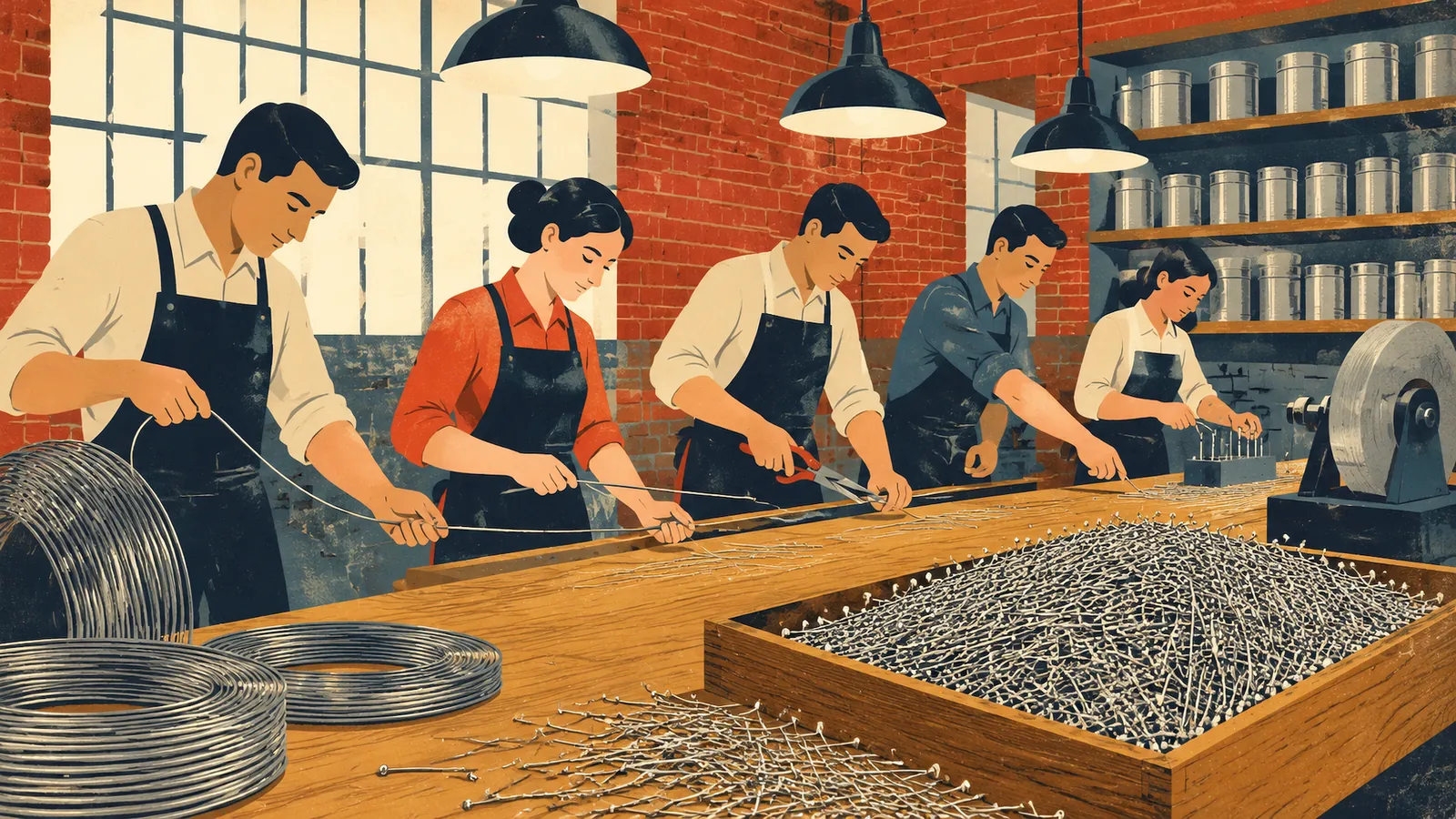
For evidence, consider how The Wealth of Nations essentially begins. The pin factory Smith reports on receives quick mention. Smith didn’t invent capitalism, rather he was reporting on man in his natural, evolving state. One man working alone in the pin factory could maybe produce 1 pin per day, but ten men working together in specialized fashion could produce tens of thousands. Which brings up a quibble with Gregg. And it’s not about the genius of work divided.
Instead, it concerns Edmund Burke. Gregg asserts that Burke’s (p. 81) “economic thought paralleled that of [Adam] Smith,” and did so right after quoting Burke as saying that “labor is a commodity like any other, and it rises and falls according to demand.” Smith’s pin factory example rejects such a view, no?
As we see with the pin factory, and in the migration of labor in general, the more hands the greater the productivity. Workers aren’t a job taken or a lower wage that’s an effect of the impossibility of “excess supply,” rather workers grow in value the more of them there are. In Smith’s words, “The most decisive mark of the prosperity of any country is the increase of the number of its inhabitants.” The more people, once again the greater the wages.
Pivoting back to Gregg on this subject (p. 42), commercial relationships extending “of their own volition within and across national boundaries are increasingly becoming a dominant form of human interaction.” And of civilization and prosperity. While it’s certainly true that humans migrate to prosperity while driving up the value for labor in the locale they migrate to, they also per Gregg are expanding commercial relationships across national boundaries on the path to even greater wages.
Said another way, and arguably opposite Burke, we were so poor when we couldn’t divide up work with as many people as possible. Gregg would seem to agree? He writes (p. 51) that’ Smith’s essential book begins with Smith immediately drawing “his readers’ attention to the sheer impoverishment of ‘the savage nations of hunters and fishers,’ which are ‘miserably poor.’” Yes, the fewer the people, the lower the wages. The more people, the higher the wages, particularly if people are fortunate enough (as they are now) to divide up work with much of the world.
It’s possible Gregg agrees with all that’s been said, or that your reviewer has misread the quotation of Burke, but the view here is that supply/demand is one of the more overrated notions in economics. There’s never too much human capital, and realistically never too much money in circulation. More on money in a bit, but for now it will be said that the more hands there are, the better paid the hands are. Supply/demand is a simplistic look at production, and the wages attached to it.
About this thread of thinking, Gregg articulates it extraordinarily well in his description of Scotland’s own evolution. He notes (p. 39) that the “nation of shopkeepers” next door (England) was the more prosperous of the two countries. Which further explains the genius of production, regardless of whether it’s in the city, state, or country you’re residing in. Say it repeatedly that when people produce, including people in enemy countries, they’re improving the lot of the rest of the world. And this includes those they’re enemies with. So, while Scotland and England were not enemies, Gregg writes (p. 39) that Scotland’s economy became “visibly wealthier” as Britain’s prosperity grew. Yes!
What Gregg writes is a reminder that free trade and globalization have never in the history of mankind even hurt one person. That’s because work itself, no matter its location, is an expanded division of labor. With Britain vis-à-vis Scotland, it didn’t matter that the two countries didn’t plan the division, what mattered is that as work being done in Britain grew in amount, the ability of the Scots to migrate to what better elevated their skills increased too.
Which calls for those reading this review or Gregg’s book to contemplate what’s happening in China. The country’s growth isn’t war for the U.S., or a threat, it’s just a much bigger example of what happened in Scotland as economic growth in Great Britain took flight. More hands did mean, and they mean now, greater opportunity as workers are freed to pursue in ever more prosperous ways work that formerly wasn’t available to them. Have the American people grown richer as the Chinese have entered the global labor force? The answer is inarguably yes.
It brings up another quibble? Again, it’s possible there’s no quibble at all. With some subjects broached by Gregg, it’s sometimes difficult to know if he's reporting or opining. On p. 44, he observed that “as agricultural life becomes more productive and multifarious as a result of technological change, rural areas find themselves with a surplus of labor. This produces a growing shift of the population into towns and ports.” There’s no disagreeing with what Gregg writes about the evolution, but there is a disagreement with his portrayal of the evolution as evidence of “a surplus of labor.” Gregg might agree that there’s never a surplus as much as rising productivity born of labor division is by its description the creation of capital, and the latter drives the creation of all manner of new business concepts that power the migration of workers to all new forms of toil.
Implied in the division of labor is a narrative that Gregg happily doesn’t employ, but that so many reasonably true believers in globalization do employ, incorrectly. Gregg himself knows it well. They’ll preface their support for globalization with an acknowledgement that the change “can be painful” as an expanded market “leaves some behind, and unemployed.” No, not ever. While the nature of work and jobs change all the time, that they do is the surest evidence of all that newer, better, and more remunerative forms of work are replacing the work of the past. Said another way, progress that springs from labor division doesn’t put us into breadlines before picking us back up, rather progress is the creator of the capital that builds new businesses that pull us into new work long before the older, less remunerative forms of work have disappeared.
It brings up a crucial point. Gregg quotes Scottish thinker Henry Home (Lord Kames), and Kames’s view (p. 68) that “great opulence opens a wide door to indolence.” No, that’s incorrect. See the United States, or see the world. The richer both become, the more hard working the people become. It’s “Tamny’s Law” from his 2018 book The End of Work, the working title of which was The End of Laziness. Tamny’s Law says “Laziness decreases as prosperity increases, expanding the range of work options so that every person can do the work that most accentuates his individual talents.” Opulence doesn’t make us lazy precisely because the opulence is an effect yet again of labor division that makes the work available to us grow in its appealing wonders with each passing day.
If shirtsleeves to shirtsleeves really were true per Kames’s allusion, then it would be also be true that the U.S.’s decline had begun many generations ago. Quite the opposite as readers know well. Americans continue to grow more well-to-do, and Gregg knows why. What’s surprising here is that Adam Smith similarly found a downside in the specialization that powers so much prosperity.
Gregg cites Smith (p. 67) as lamenting a loss of creativity care of specialization. In Smith’s words, man’s “dexterity at his own particular trade seems, in this manner, to be acquired at the expense of his intellectual, social, and martial virtues.” It doesn’t ring true. Progress is defined by not what we know, but what we no longer need to know. The centuries since Smith published his essential book support just this truth. It can’t be said enough that precisely no one is harmed by globalization that frees us from having to do know and do so much that we used to have to know and do.
Americans thankfully grow more specialized by the day. See plummeting math scores to offer up but one example. Yes, the falling scores are bullish. They’re a market signal of even greater prosperity in our future as we narrow our pursuits even more thanks to people and machines thinking and doing for us. This does not signal decline, or something occurring “at the expense” of intellect and the rest. Knowledge no longer retained is just so bullish. As machines and people free us from past work, we won’t become less knowledgeable, rather what we know will change for the better.
This, at least to your reviewer, is the civilizational genius of the freedom Gregg is making a case for. It’s not wealth, though wealth is certainly an effect of freedom. But the greatest gift of a free, interconnected world bound by people, machines that do for us, and machines that think for us, is energetic people waking up proud and intensely motivated because their work is an expression of their unique genius.
People doing what they love are prosperous and happy simply because productivity makes us happy. And it makes us happy because it’s not work. Gregg quotes Smith later in the book (p. 245) as writing that “Man was made for action,” that man can’t be happy with his personal economic situation “unless he has actually produced” what he possesses. In Gregg’s words (p. 245), “for Smith, humans are not made for indolence.” Yes. So very true, and it will become quite a bit truer as the world becomes even more connected than it is now not just with other humans, but machines. Happy people defined by relentless work ethic.
Gregg happily doesn’t need to write a book about policy exactly because freedom is the policy. And when free people naturally migrate to what elevates them, civilization flowers.
Still, underlying a book not about policy is policy. And that’s because economists can’t be economists without calls for policy. A book that “is not about economic policy” is in fact making a case for policies that make it possible for the people who are the market to prosper. There’s no arguing with Gregg on any of this.
At the same time, reading his description of the policy views of economic figures like John Maynard Keynes and Milton Friedman had me confused. Was Gregg agreeing with Keynes when he wrote of how (p. 92) “Keynes argued that aggregate demand is what ultimately drives economic activity,” and that if demand declines, the fix would be an increase of “government expenditures.”
Farther down the same page, Gregg presents Milton Friedman as the embodiment of free market thought, as the alleged antidote to Keynes given Friedman’s view that Keynes’s economic models “were excessively focused on short-term demand management and did not adequately consider the long-term consequences, especially the inflation that follows from central banks increasing the money supply more quickly than the economy’s output of goods and services.” Ok, but with whom does Gregg agree, or does he agree with neither Keynes nor Friedman?
To most reading the book or this review, it would surely be “obvious” with whom Gregg agrees: Friedman. But is it really so obvious, or for that matter were Keynes and Friedman really so much at odds?
Starting with Keynes from the perspective of your reviewer, the British thinker was hopelessly wrong. At least the Keynes who “grew in office” as it were. Behind all demand is production, and governments produce nothing. For Keynes to then believe that governments could keep an economy afloat via “expenditure” was for Keynes to insult reason. Governments can only spend insofar as the productive have less to spend. No economic religion can get around the previous truth.
Which brings us to Friedman, and the basis of the question asked about whom Gregg agrees with. If Keynes was wrong, and he was, then so was Friedman. Per Gregg he wasn’t so much disagreeing with Keynes about the ability of government to increase demand, rather he disagreed about the most effective way for government to increase demand. As Gregg’s commentary about Friedman makes plain, Friedman felt the path to increased demand via government was through the central bank. Put another way, Friedman didn’t disagree with Keynes about government having the capacity to increase demand, he just felt the more effective way was through increases in so-called “money supply.” Which places monetarism not at odds with Keynesianism, but rather as a variant of it. Does Gregg agree?
If not, how to explain Friedman’s view that the Fed could have staved off the “Great Depression” by increasing so-called “money supply,” or conversely that the Fed’s failure to increase so-called “money supply” was the primary cause of the 1930s downturn? Friedman didn’t believe as classical liberals do that government can’t stimulate anything, rather he felt the Fed should be the source of demand opposite Keynesians who felt government spending should be employed. Coke, or Pepsi?
What’s important is that Keynesianism and monetarism, in not rejecting one another, would be rejected by Adam Smith. Smith understood, as did Mises, that money in circulation is not an effect of central banks, it’s instead an effect of production. Money mirrors production. That was precisely Smith’s point in The Wealth of Nations when he observed that “The same quantity of money cannot long remain in any country in which the value of the annual produce diminishes.” Thought of another way, where there’s production there’s always money. Where there isn’t production, there’s no money.
Which brings us to Ludwig von Mises. He wrote in The Theory of Money and Credit what’s true, that “No individual and no nation need fear at any time to have less money than it needs.” Exactly. Production IS money simply because per Smith, “the sole use of money is to circulate consumable goods.” No reasonable economic thinker would ever consume himself with money in circulation simply because production ensures circulating exchange media precisely because production is an expression of a desire to exchange.
Much time is spent on this as a way of trying to figure out not just what Gregg believes, but whom Gregg believes. Friedman is yet again billed as one of the great minds of free market philosophy in The Civilization of Commerce, but his views on money, so-called “money supply,” along with “aggregate demand” are very much a Keynesian rejection of free markets. Keynes felt government spending would boost demand, Friedman felt the Fed’s expansion of so-called “money supply” could power demand upward. Nonsense. By extension, Friedman’s view that the Fed caused the Great Depression was similarly nonsense.
Implied in Friedman’s views is that central banks can and could overwhelm a lack of production with “money printing.” Except that what fails in the eyes of Smith and Mises, also fails simple logic for those reading this review. Consider west Baltimore: A picture definition of abject American poverty, imagine if the Fed were to buy interest bearing bonds en masse from banks in and around west Baltimore to boost so-called "money supply" there, or better yet, imagine if the Fed helicoptered billions of dollars into west Baltimore’s epicenter.
If so, the billions would exit west Baltimore as fast as they arrived. And that’s true even if those stuffing their pockets with the billions spent it all at the relatively few businesses in the area. No business is going to invest in expansion based on a helicopter drop, which means businesses would bank the money followed by the money being loaned to those eager to treat it well far, far from west Baltimore.
Taking it further, Gregg writes on p. 105 that that humility “is rarely found among those trying to build heaven on earth based on scientistic principles.” There’s no disagreement with Gregg, but there’s wonderment that Friedman continues to walk on water among freedom-focused economists even though he was a proponent not just of foisting his central planning of an effect of production (money) on country economies, but he also felt that a lack of central planning or a failure to centrally plan the right way by the Fed brought on the 1930s. This being true, why does Friedman continuously escape critique on the right, and why do Friedman’s disciples still escape it?
One last thing on Friedman: he was explicitly in favor of floating money. Yes, a PhD standard over a commodity standard. But Adam Smith yet again asserted that “the sole use of money is to circulate consumable goods.” Yes, precisely. Money is an effect of commerce. Naturally it’s in sufficient “supply” where production is simply because production is an expression of a desire to get. Taking this further vis-à-vis Gregg, Gregg cites on p. 211 Austrian School thinker Carl Menger’s assertion that money wasn’t “legislative arts,” rather agreements of value were a natural market phenomenon. Since production is an expression of a desire to get, it’s only natural that man happened on gold as a definer of money “par excellence” (Marx) since it was and is so constant. Gold gave money a constancy that offended Friedman who saw a role for PhDs as central planners of supply of something that in a free marketplace, would only be limited by production. Please think about this with floating money top of mind.
To the extent that money’s value is uncertain, so does exchange become more uncertain. Said another way, floating money introduces winners and losers into a trade scenario that by its very name should only have winners. It raises still more questions about why Milton Friedman is so venerated by the PhD class.
Gregg cites Adam Smith’s simple quip (p. 197) that prosperity is amounts to “peace, easy taxes, and a tolerable administration of justice.” Yes. Prosperity is an absence of policy since humans are designed to pursue it. Yet Friedman found himself, and his disciples find themselves saying that an alleged failure of the central bank to produce enough exchange media was the principal cause of the Great Depression. The very notion insults common sense. Unknown is why more economists are unwilling to question accepted wisdom.
When reading an excellent book like Gregg’s, it’s always interesting to imagine what in it the author found most interesting, eye-opening, or thought-expanding. One eye opener for your reviewer came in the book’s prologue. Gregg quotes historian A.J.P. Taylor’s observation that a typical British person in the 1880s and 1890s p. (p. xvii) “would hardly notice the existence of the state.” About this, if you’re reading this review, odds are the latter won’t surprise you.
It also arguably won’t surprise you that per Taylor once again (p. xviii), “this idyllic description” didn’t sustain, that “the early twentieth century witnessed [classical] Liberal Party governments under prime ministers like H.H. Asquith and Lloyd George passing legislation that began taking the British state far beyond the limits envisaged by nineteenth-century liberals.” The deeply held view here is that the quotations of Taylor followed by what Gregg reports about the state expanding “far beyond the limits envisaged by nineteenth-century liberals” is one of the book’s most important passages.
It’s a reminder that brilliant as prosperity is, and civilizing as it most certainly is, politicians will spend its fruits in freedom and progress-sapping ways. Always. Forget the ideology of the Party in power, politicians spend. And they warp and weaken in the process.
Which calls for the right-leaning to rethink their smug “socialist” jabs at “socialist” blue states like California and New York. Perhaps a more realistic way to look at both is that with all the brilliant economic talent in both, bad governance was inevitable for it producing abundant wealth that would empower in growing ways a wealth destroying political class. Which supports your reviewer’s contention that as “red states” become more prosperous, the quality of their governance will decline.
It speaks to the genius of people. Gregg writes (p. 204) that when the rules that “uphold private property rights are corroded or go systematically unenforced, “markets are compromised.” There’s no argument with Gregg there, but aren’t laws an effect of market norms, not a cause? Asked another way, would New York City be Lagos without the Constitution? Gregg’s answer is no. He fascinatingly reports per Alexis de Tocqueville (p. 204) that “political instability and poverty remained endemic to Mexico” despite its 19 th century adoption of the U.S. Constitution in the 19 th century.
Gregg writes early in The Civilization of Commerce (p. xi) that “market liberalism’s formidable record in creating wealth and dragging millions out of poverty has not assuaged the widespread skepticism about market economies that persists,” hence a book that successfully reveals the genius of market liberalism beyond charts and other forms of evidence-based argument. Gregg makes his case so well, but the view here is that Gregg is perhaps mistaking the critics of market liberalism?
About this, it’s not an argument with Gregg that the critics don’t exist. There are many (think AOC, Elizabeth Warren, Bernie Sanders, etc. etc.), but it is an argument that a growing number of market critics is a bullish signal. Yes, you read that right.
Said another way, if Gregg were happily handling U.S. policy instead of White House occupants of recent vintage, the speculation here is that there would be exponentially more AOCs, Warrens and Sanders. That’s because Gregg believes deeply in freedom, and freedom correlates with the wealth creation that invariably begets demagogues.
It’s something to think about as readers hopefully purchase Gregg’s book. As it comes to a close, he writes about how (p. 266) “keeping the right ideas alive is indispensable.” Yes it is, and few do it better than Samuel Gregg. Evidence supporting this claim can be found in the demagogues mentioned that Gregg rightly disdains, but that more than most things confirm what a great job Gregg is doing making a case for freedom.
Originally published on Real Clear Markets.